
Understanding 10 Ton Ultrafiltration Equipment: A Key Component in Life Sciences
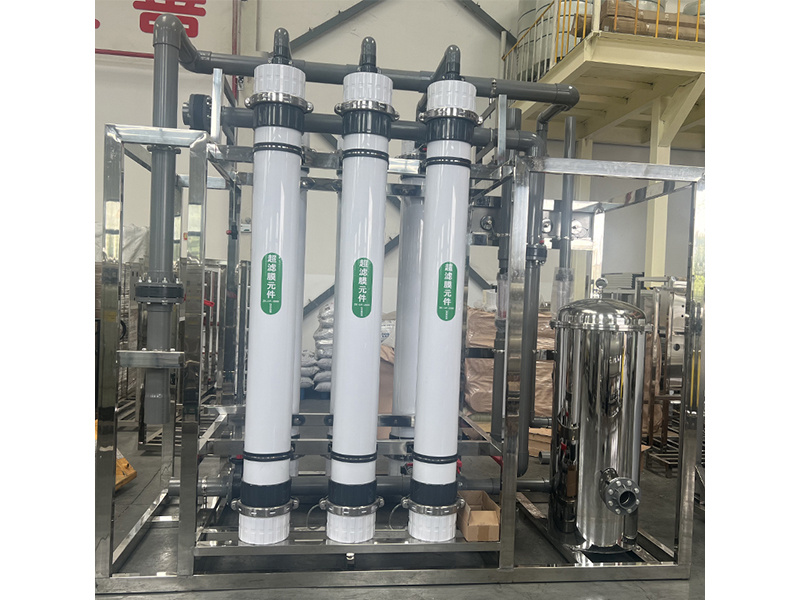
Ultrafiltration (UF) is a crucial separation technology used extensively in various applications, particularly within the life sciences sector. The 10-ton ultrafiltration equipment represents a high-capacity option designed to meet the rigorous demands of large-scale operations. This equipment employs a semipermeable membrane that effectively separates particles based on size, allowing for the purification and concentration of biomolecules, proteins, and other crucial components.
One of the primary advantages of 10-ton ultrafiltration equipment is its ability to filter out larger particles, such as cells, bacteria, and particulates, while retaining smaller molecules like salts and solvents. This capability is particularly beneficial in biological and pharmaceutical applications, where maintaining the integrity of biomolecules is essential. By utilizing this equipment, researchers can achieve higher product purity, which is vital for ensuring the effectiveness and safety of biopharmaceutical products.
In addition to purification, 10-ton ultrafiltration systems are also employed in concentration processes. For instance, researchers can concentrate proteins or enzymes, making them more efficient for downstream applications. This process not only saves time and resources but also enhances the overall yield of valuable products.
The operational efficiency of 10-ton ultrafiltration equipment is another significant benefit. These systems are designed for continuous operation, which is essential for large-scale production environments. They can handle sizable volumes of liquid, thus increasing throughput and reducing processing times. This efficiency is crucial for laboratories and facilities that require quick turnaround times for their products.
Furthermore, ultrafiltration is an environmentally friendly technology. It reduces the need for chemical additives in the purification process, leading to a lower environmental impact. The cross-flow filtration method used in ultrafiltration minimizes membrane fouling, enhancing the lifespan of the membranes and reducing maintenance costs.
When selecting ultrafiltration equipment, it is vital to consider factors such as membrane material, pore size, and system configuration. These parameters can significantly affect the performance and efficiency of the system. Integrating advanced monitoring and control systems can also optimize the ultrafiltration process, providing real-time data on operational performance and allowing for adjustments as needed.
In conclusion, 10-ton ultrafiltration equipment plays a pivotal role in the life sciences industry by facilitating the purification and concentration of essential biomolecules. Its operational efficiency, environmental benefits, and ability to maintain product integrity make it an invaluable tool for researchers and manufacturers alike. Understanding the capabilities and applications of this technology can help organizations leverage its advantages to enhance their research and production processes.
One of the primary advantages of 10-ton ultrafiltration equipment is its ability to filter out larger particles, such as cells, bacteria, and particulates, while retaining smaller molecules like salts and solvents. This capability is particularly beneficial in biological and pharmaceutical applications, where maintaining the integrity of biomolecules is essential. By utilizing this equipment, researchers can achieve higher product purity, which is vital for ensuring the effectiveness and safety of biopharmaceutical products.
In addition to purification, 10-ton ultrafiltration systems are also employed in concentration processes. For instance, researchers can concentrate proteins or enzymes, making them more efficient for downstream applications. This process not only saves time and resources but also enhances the overall yield of valuable products.
The operational efficiency of 10-ton ultrafiltration equipment is another significant benefit. These systems are designed for continuous operation, which is essential for large-scale production environments. They can handle sizable volumes of liquid, thus increasing throughput and reducing processing times. This efficiency is crucial for laboratories and facilities that require quick turnaround times for their products.
Furthermore, ultrafiltration is an environmentally friendly technology. It reduces the need for chemical additives in the purification process, leading to a lower environmental impact. The cross-flow filtration method used in ultrafiltration minimizes membrane fouling, enhancing the lifespan of the membranes and reducing maintenance costs.
When selecting ultrafiltration equipment, it is vital to consider factors such as membrane material, pore size, and system configuration. These parameters can significantly affect the performance and efficiency of the system. Integrating advanced monitoring and control systems can also optimize the ultrafiltration process, providing real-time data on operational performance and allowing for adjustments as needed.
In conclusion, 10-ton ultrafiltration equipment plays a pivotal role in the life sciences industry by facilitating the purification and concentration of essential biomolecules. Its operational efficiency, environmental benefits, and ability to maintain product integrity make it an invaluable tool for researchers and manufacturers alike. Understanding the capabilities and applications of this technology can help organizations leverage its advantages to enhance their research and production processes.

Phone/WhatsApp:
Email:
About Us
Jingter environmental protection is a professional engaged in water treatment equipment and environmental protection equipment, research and development,production, sales, technical services and engineering contracting company
HUATAO GROUP


Leave Message
If you have any queries about us or our product(s), feel free to drop us a message.